Freshwater vs Saltwater Pearls: Similarities and Differences
Introduction
Pearls have captivated human imagination for millennia, adorning royalty and aristocracy throughout history while symbolizing elegance, sophistication, and timeless beauty. These lustrous gems form naturally within certain mollusks as a defense mechanism against irritants that enter their shells. However, not all pearls are created equal. The two main categories—freshwater and saltwater pearls—possess distinct characteristics, formation processes, and value propositions that influence their appearance, durability, and price in the marketplace.
This comprehensive guide aims to explore the fascinating world of pearls, specifically comparing freshwater and saltwater varieties across multiple dimensions. Whether you’re a jewelry enthusiast, a potential buyer, or simply curious about these organic gems, understanding the differences between these pearl types will help you make informed decisions and appreciate the unique qualities each possesses.
Table of Contexts
The Fundamental Difference: Origins and Environments
Freshwater Pearls
As their name suggests, freshwater pearls originate from mussels that inhabit rivers, lakes, and ponds—environments with non-saline water. The vast majority of today’s freshwater pearls come from China, which has revolutionized freshwater pearl cultivation since the 1970s. Other notable, though smaller, sources include the United States and Japan, with the latter being home to the original Biwa pearls from Lake Biwa.
Chinese pearl farmers have perfected techniques that allow a single freshwater mussel to produce multiple pearls simultaneously—sometimes between 6 and 120 pearls per mollusk. This impressive yield explains why freshwater pearls dominate the market in terms of volume and accessibility.
Saltwater Pearls
In contrast, saltwater pearls form within oysters that inhabit oceans, seas, and other saline bodies of water. These pearls typically develop in protected bays and lagoons with warm waters surrounding countries such as Japan, Australia, Indonesia, French Polynesia, and Thailand.
Unlike their freshwater counterparts, saltwater pearl-producing oysters generally yield just one pearl in their entire lifetime. This limited production capacity, combined with strict regulations governing saltwater pearl farming, contributes significantly to their higher price point and perceived exclusivity.

Culvation of Freshwater Pearls

Mother of Pearls
The Formation Process: Natural vs. Cultured
The Natural Pearl Formation
Natural pearls—both freshwater and saltwater—form without human intervention when an irritant like a parasite or small particle enters the mollusk. As a defense mechanism, the mollusk secretes a fluid called nacre (mother-of-pearl) to coat the irritant. Layer upon layer of nacre builds up over time, eventually forming what we recognize as a pearl.
Due to increasing pollution, habitat destruction, and overharvesting, truly natural pearls are exceedingly rare in today’s market and command extraordinary prices when they do appear.
Cultured Pearl Production
It’s a common misconception that saltwater pearls are natural while freshwater pearls are cultured. In reality, virtually all pearls available in today’s jewelry market—whether freshwater or saltwater—are cultured, meaning humans have intervened in their formation process.
Freshwater Pearl Cultivation
Freshwater pearl cultivation typically involves inserting a piece of mantle tissue from another mussel into the host mussel. This tissue piece serves as an irritant that eventually dissolves, leaving behind a pearl composed almost entirely of nacre. Because no bead nucleus remains inside, freshwater pearls are often described as “tissue-nucleated.”
The absence of a bead nucleus explains why traditional freshwater pearls were often irregularly shaped. However, modern cultivation techniques have improved dramatically, allowing for the production of increasingly round and consistent freshwater pearls.
Saltwater Pearl Cultivation
All cultured saltwater pearls are “bead-nucleated,” meaning pearl farmers insert both a piece of mantle tissue and a round bead (typically made from shell material) into the oyster. The oyster then deposits nacre around this perfectly round nucleus, which explains why saltwater pearls tend to be more consistently round in shape.
This different nucleation method results in saltwater pearls having thinner nacre layers over a solid core, while freshwater pearls are composed almost entirely of nacre, making them more dense overall.
Types of Saltwater Pearls
The saltwater pearl category encompasses three main varieties, each with unique characteristics:
Akoya Pearls
Primarily cultivated in Japan (though China also produces them), Akoya pearls are known for their exceptional luster—perhaps the most brilliant and reflective of all pearl types. These pearls typically display white or cream colors with undertones of pink, silver, or blue and range from 5mm to 10mm in size. Their sharp, mirror-like luster creates a distinctive reflective quality that many pearl connoisseurs consider the gold standard.
Tahitian Pearls
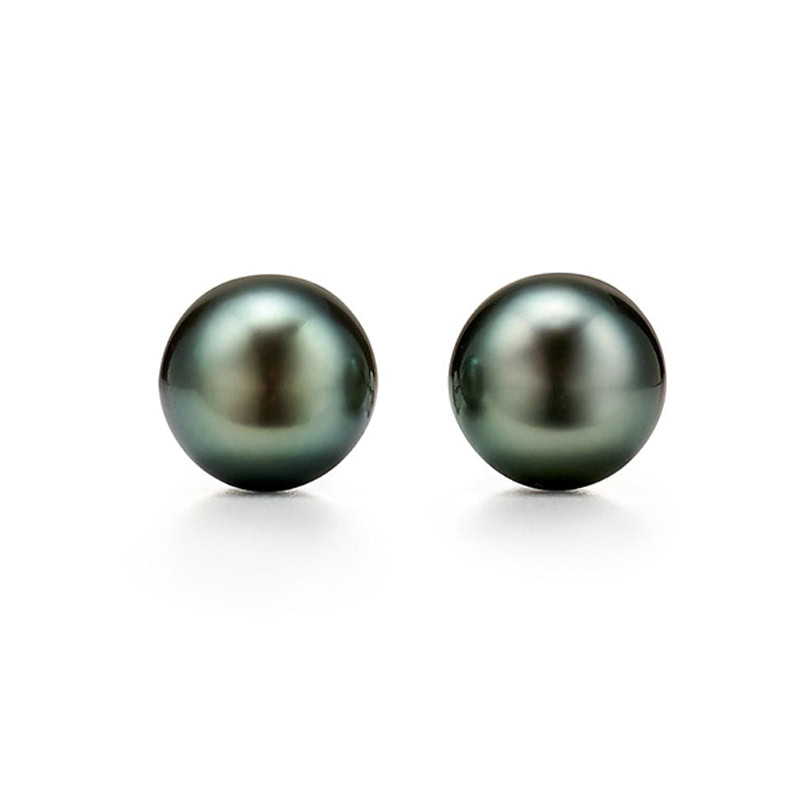
Contrary to what their name might suggest, these pearls aren’t exclusive to Tahiti but are cultivated throughout French Polynesia. Tahitian pearls are famous for their naturally dark colors, including black, gray, green, blue, and purple, often with peacock, aubergine, or pistachio overtones. They typically range from 8mm to 18mm in size and display a satiny luster that exudes luxury and sophistication.
South Sea Pearls
The largest of all pearl types, South Sea pearls come primarily from Australia, Indonesia, and the Philippines. These pearls fall into two color categories: silvery white (from Australia and the Philippines) and golden (primarily from Indonesia). Their size typically ranges from 9mm to an impressive 20mm. Like Tahitian pearls, South Sea pearls exhibit a satiny luster with a dreamy quality that distinguishes them from the sharper shine of Akoyas.

Saltwater pearl farming

Shapes of Pearls
Comparing Key Characteristics
Shape and Size
Freshwater pearls historically had more irregular shapes compared to their saltwater counterparts due to their tissue-nucleation process. While baroque (irregularly shaped) freshwater pearls remain common, modern cultivation techniques have dramatically improved, producing increasingly round specimens that rival saltwater pearls in symmetry.
Regarding size, saltwater pearls generally outsize freshwater varieties:
- Freshwater pearls typically range from 5mm to 12mm
- Akoya pearls range from 5mm to 10mm
- Tahitian pearls range from 8mm to 18mm
- South Sea pearls, the largest, range from 9mm to 20mm
Luster and Surface Quality
Luster—the reflection of light off a pearl’s surface—differs significantly between freshwater and saltwater varieties:
- Freshwater pearls typically exhibit a soft, silky luster that’s warm and subtle
- Akoya pearls display a sharp, mirror-like luster with exceptional reflectivity
- Tahitian and South Sea pearls present a satiny luster with depth and richness
Surface quality also varies, with saltwater pearls generally showing fewer surface imperfections than freshwater pearls. However, high-quality specimens of both types can have excellent surface quality with minimal blemishes.
Color Range
Freshwater Pearls
Freshwater pearls offer an impressive natural color palette including white, cream, pink, lavender, and peach. Additionally, they can be dyed virtually any color, expanding their versatility for jewelry design. The colors of freshwater pearls mimic the inner nacre of the mussels they grow in, explaining their wide natural color variation.
Saltwater Pearls
Each saltwater pearl type has its characteristic color range:
- Akoya pearls typically come in white to cream with blue or gray undertones (though they’re often bleached to achieve pure white)
- Tahitian pearls display dark colors including black, gray, green, blue, and purple with various overtones
- South Sea pearls primarily come in silvery white or golden hues
Durability and Wear
The composition of freshwater and saltwater pearls affects their durability:
Freshwater pearls, composed almost entirely of solid nacre, are generally more resistant to chipping and wear than saltwater pearls, whose nacre layers may be thinner over their bead nucleus. This makes freshwater pearls surprisingly durable for everyday wear despite their lower price point.
However, all pearls require proper care to maintain their beauty. They should be stored separately from harder gemstones to prevent scratching, cleaned gently with a soft cloth, and kept away from chemicals including perfumes, hairspray, and cleaning products.
Value and Pricing Factors
The price disparity between freshwater and saltwater pearls stems from several factors:
Rarity and Production Volume
Freshwater mussels can produce multiple pearls simultaneously (sometimes over 100), while saltwater oysters typically yield just one pearl per lifetime. Additionally, strict regulations limit saltwater pearl production, making these gems inherently scarcer.
Cultivation Difficulty
Saltwater pearl farming presents greater challenges than freshwater cultivation:
- Requires access to protected marine environments
- Involves more complex and costly infrastructure
- Faces higher risks from weather events, predators, and disease
- Demands longer cultivation periods (typically 2-4 years compared to 6 months to 5 years for freshwater pearls)
Size and Quality Considerations
While the price gap between high-quality freshwater and saltwater pearls has narrowed in recent years due to improvements in freshwater pearl cultivation, significant differences remain:
- Entry-level freshwater pearl strands might start at $50-$300
- Quality Akoya pearl strands typically range from $500-$5,000
- Tahitian pearl strands generally range from $1,000-$20,000
- South Sea pearl strands, the most expensive, typically start at $1,500 and can exceed $100,000 for exceptional specimens
It’s worth noting that advances in freshwater pearl cultivation have produced increasingly high-quality specimens that rival some saltwater pearls in appearance. This has narrowed the quality gap between top-tier freshwater pearls and certain saltwater varieties, complicating traditional price hierarchies.

Selecting Between Freshwater and Saltwater Pearls
When choosing between freshwater and saltwater pearls, consider these factors:
Budget Considerations
If working with limited funds, freshwater pearls offer exceptional value, providing the beauty and elegance of pearls at accessible price points. They’re ideal for:
- Everyday jewelry
- Fashion-forward pieces that might be replaced as trends change
- Gifts for younger pearl enthusiasts
- Building an initial pearl collection
For special occasions, significant milestones, or investment pieces, saltwater pearls—particularly Akoyas, Tahitians, or South Sea varieties—might justify their higher price through their exceptional luster, size, and prestige.
Aesthetic Preferences
Your personal style and aesthetic preferences should guide your choice:
- If you prefer organic, slightly irregular shapes with soft luster, freshwater pearls offer these qualities along with diverse color options
- For classic, perfectly round pearls with sharp, reflective luster, Akoya pearls remain the traditional choice
- If you’re drawn to larger pearls with exotic colors, Tahitian or South Sea pearls provide these distinctive characteristics
Intended Use
Consider how and when you’ll wear your pearls:
- For everyday wear and versatility, freshwater pearls offer durability and affordability
- For special occasions and formal events, saltwater pearls provide exceptional luster and presence
- For statement pieces that showcase individuality, consider colored freshwater pearls or distinctive Tahitian varieties
- For heirloom-quality investments, South Sea pearls offer enduring value and impressively large sizes
Common Misconceptions About Pearls
Several persistent myths surround the world of pearls:
“Saltwater Pearls Are Natural, Freshwater Pearls Are Cultured”
As mentioned earlier, virtually all pearls on the market today—both freshwater and saltwater—are cultured. Truly natural pearls (those formed without human intervention) are exceptionally rare and typically found only in antique jewelry or museum collections.
“Real Pearls Must Be Perfectly Round”
While perfectly round pearls are highly valued, they represent just one of many legitimate pearl shapes. Baroque (irregularly shaped), drop, button, and oval pearls are all genuine pearl formations with their own unique appeal and value in jewelry design.
“Saltwater Pearls Are Always Superior to Freshwater Pearls”
While traditional wisdom held that saltwater pearls were inherently superior, advances in freshwater pearl cultivation have significantly narrowed this quality gap. Today’s premium freshwater pearls can rival certain saltwater varieties in roundness, luster, and overall beauty, challenging the traditional hierarchy.
“Pearls Are Only Available in White”
Though classic white pearls remain popular, both freshwater and saltwater pearls naturally occur in diverse colors. From the soft pastels of freshwater pearls to the exotic dark hues of Tahitians and the golden tones of South Sea pearls, the color palette of natural pearls extends far beyond traditional white.

Caring for Your Pearls
Regardless of whether you choose freshwater or saltwater pearls, proper care will preserve their beauty for generations:
Daily Care Guidelines
- Make pearls the last thing you put on and the first thing you take off
- Keep pearls away from perfumes, cosmetics, hairspray, and other chemicals
- Wipe pearls with a soft, slightly damp cloth after wearing to remove oils and perspiration
- Store pearls separately from other jewelry to prevent scratching
- For strung pearls, lay them flat rather than hanging them to prevent stretching the thread
Professional Maintenance
- Have pearl strands restrung every few years or when the thread shows signs of weakening
- Professional cleaning can revitalize pearls that have dulled over time
- Consider professional assessment if pearls show signs of damage or deterioration
Conclusion
The choice between freshwater and saltwater pearls ultimately depends on your personal preferences, budget, and intended use. Both types offer distinctive beauty and character that have captivated humanity for centuries.
Freshwater pearls provide accessibility, versatility, and increasingly impressive quality, making them excellent choices for everyday wear and fashion-forward designs. Their solid nacre composition offers surprising durability, while their diverse shapes and colors provide creative possibilities for contemporary jewelry.
Saltwater pearls—whether Akoya, Tahitian, or South Sea—deliver exceptional luster, consistent shapes, and prestigious heritage that justify their higher price points for special occasions, significant gifts, and investment pieces. Their distinctive characteristics make them perennial favorites for classic pearl jewelry.
The good news for pearl enthusiasts is that advances in cultivation techniques continue to improve quality across all pearl types, while expanding stylistic options beyond traditional strands to include contemporary designs that showcase these organic gems in fresh, exciting ways.
Whether you choose the accessible luxury of freshwater pearls or the prestigious elegance of saltwater varieties, these remarkable gems connect us to a tradition of natural beauty that transcends trends and remains eternally sophisticated—a rare quality in today’s fast-changing world of fashion and accessories.
Share This Article

Written by : Scarlett Chen
Follow Us
Latest Articles
July 28, 2026
July 28, 2026