The Ultimate Guide to Mabe Pearls: Your Complete Resource for History, Value, Care, and Where to Buy Authentic Wholesale Mabe Pearls Online
In the enchanting world of gemstones, few possess the ethereal beauty and organic origin of pearls. While the classic round Akoya or the lustrous South Sea pearl often steals the spotlight, there exists a unique and captivating category that offers a different kind of magic: the Mabe pearl. For jewelry designers, collectors, and savvy shoppers seeking a distinctive blend of elegance and affordability, understanding what are Mabe pearls is the first step on a fascinating journey.
This definitive guide is your one-stop resource for everything you need to know about these remarkable gems. We will delve deep into their history, uncover the intricate process of their creation, explore their unique characteristics, and answer the most common questions like how are Mabe pearls formed and are Mabe pearls real pearls? Whether you are searching for wholesale Mabe pearls for jewelry making, looking to understand Mabe pearl value and pricing, or simply curious about different types of cultured pearls, this article is designed to be your authoritative source.
By the end, you’ll not only be an expert on Mabe pearls but also know exactly where to find the highest quality specimens at the best possible price. Let’s begin our exploration of these luminous half-spheres of the sea.
Defining the Enigma – What Exactly Are Mabe Pearls?
Before we can appreciate their beauty, we must first define them. So, what is a Mabe pearl?
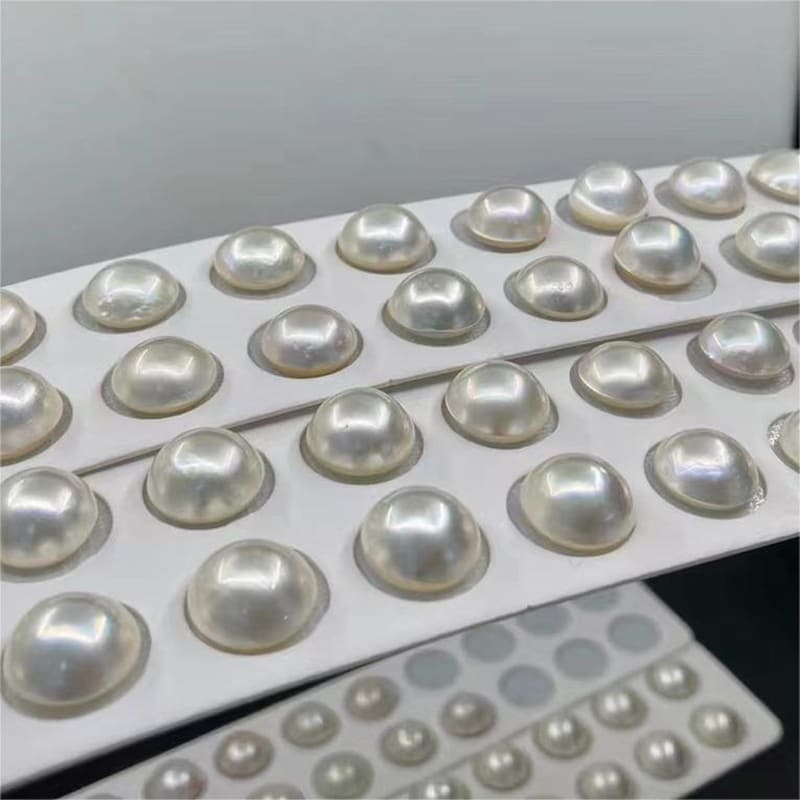
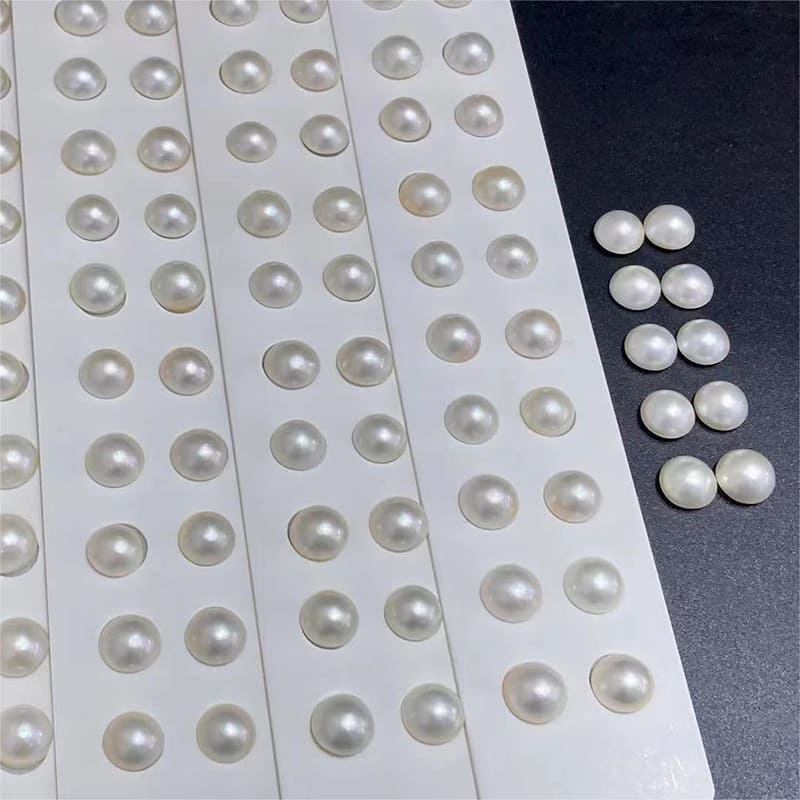
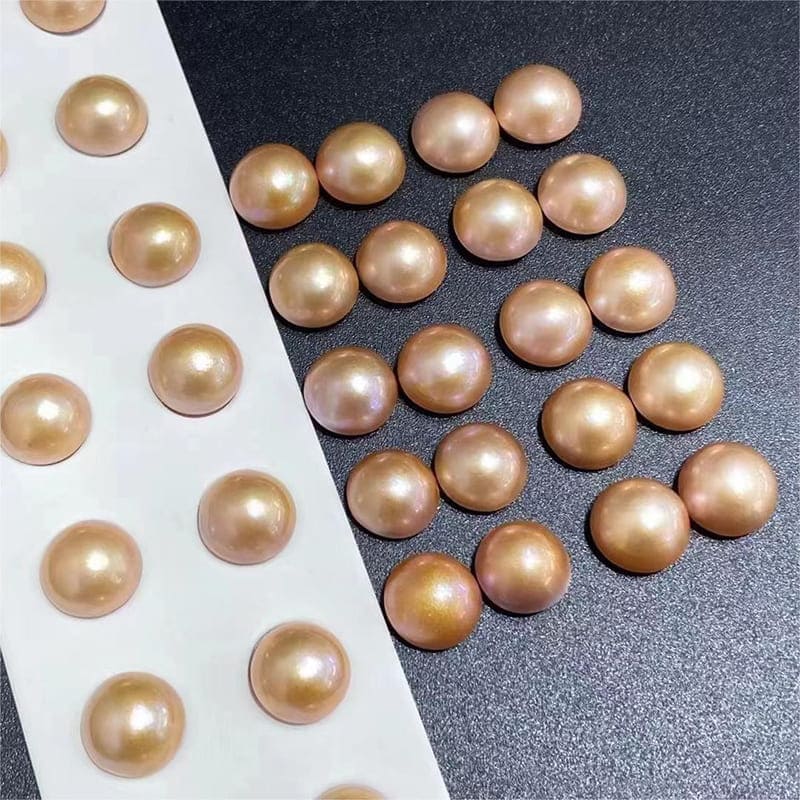
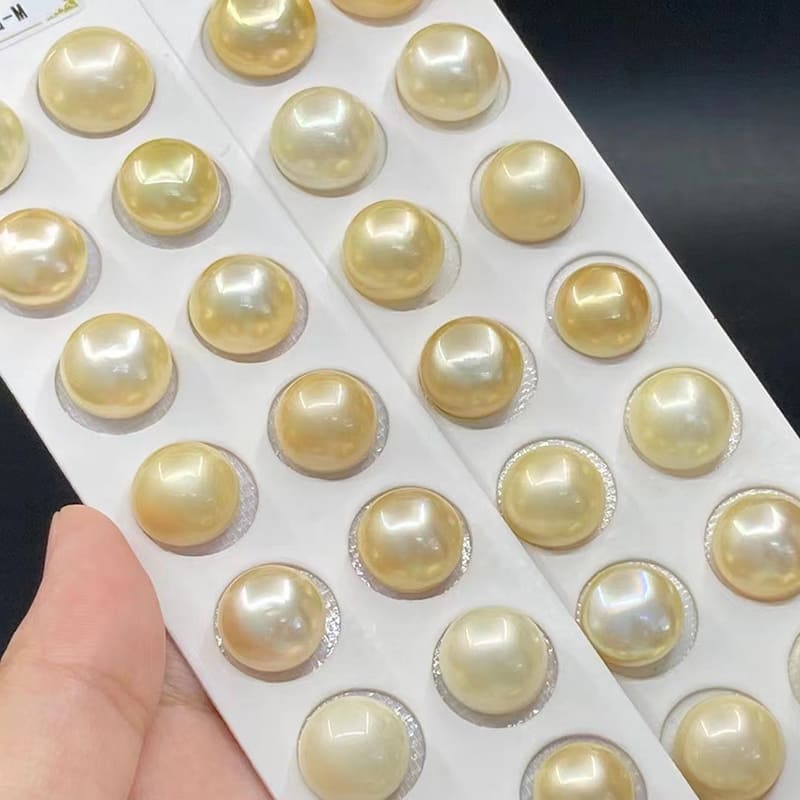
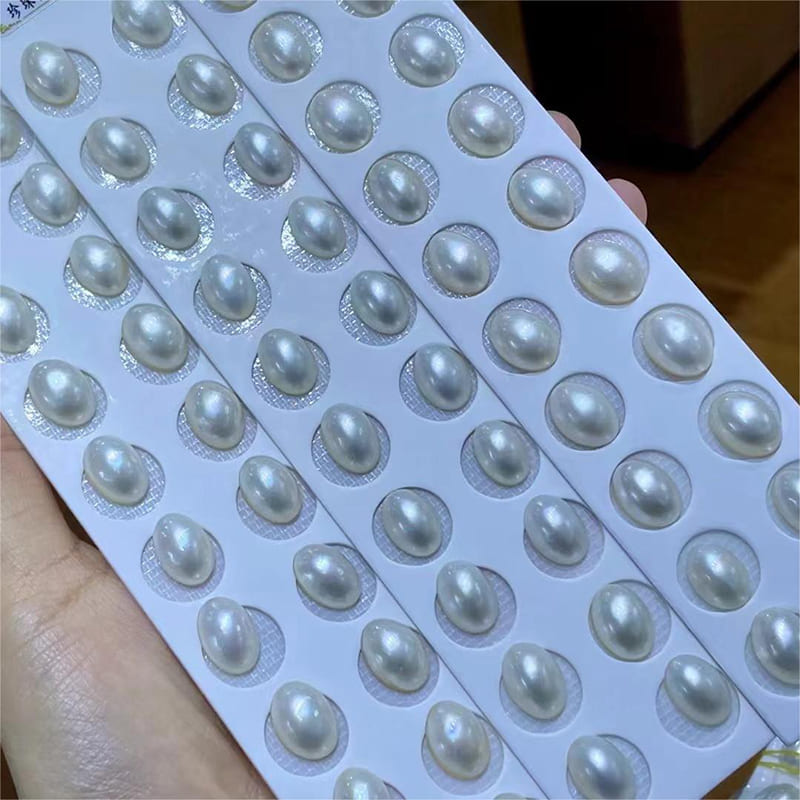
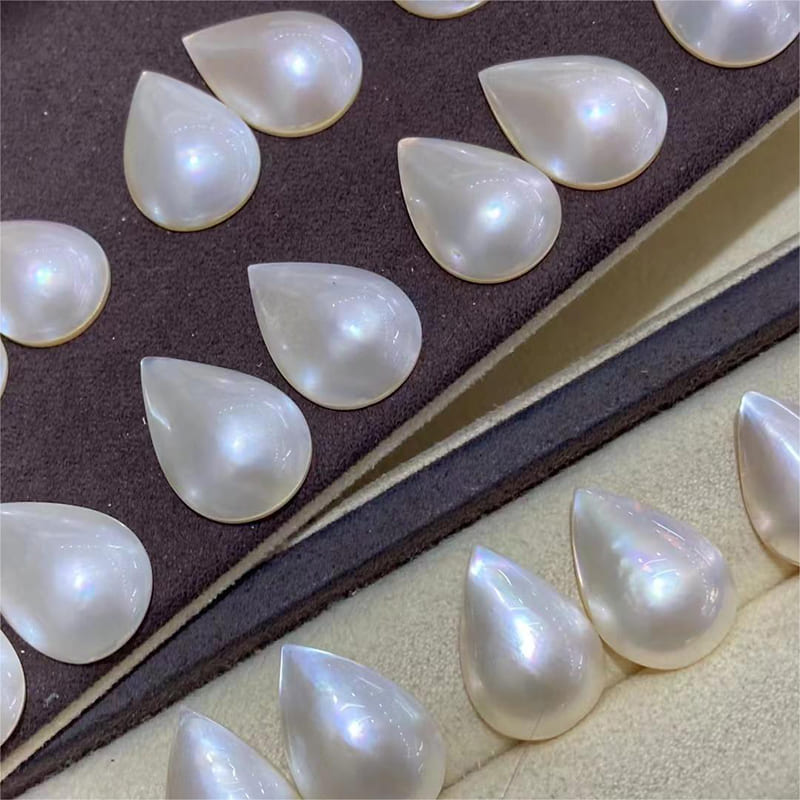
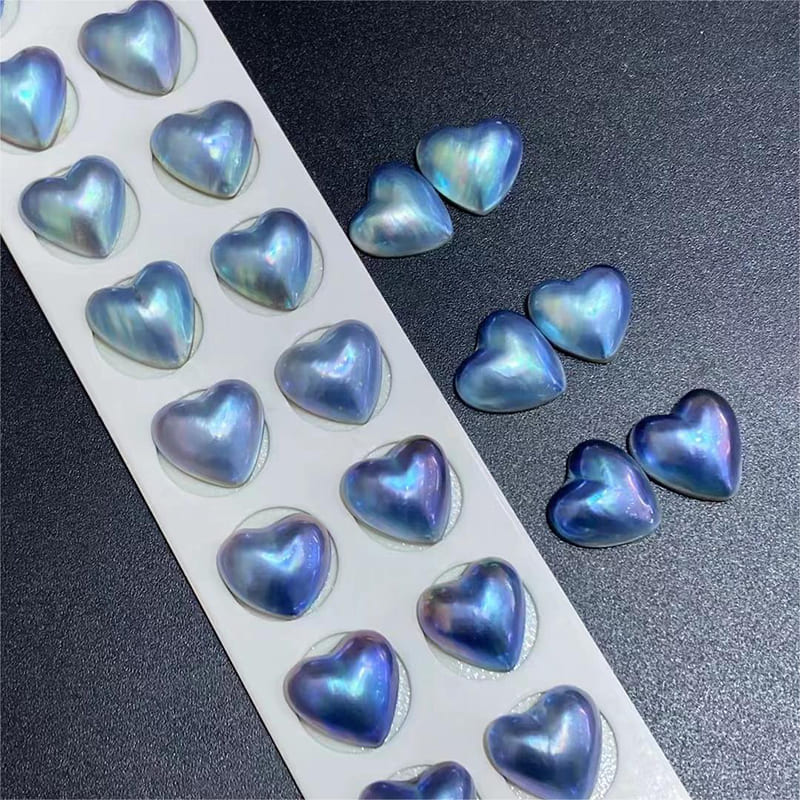
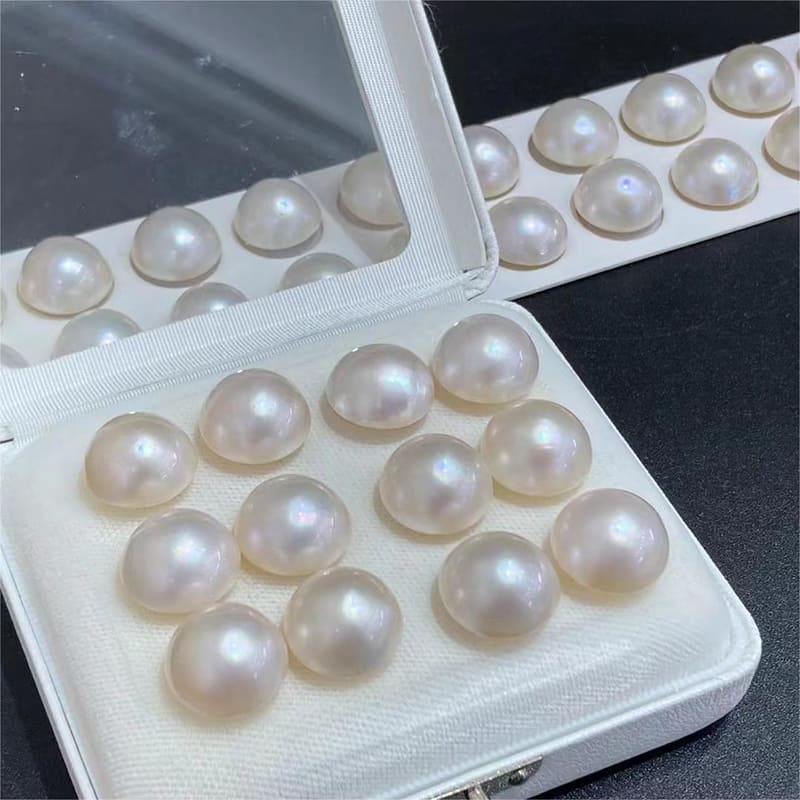
A Mabe pearl, also known as a blister pearl or a half-pearl, is a type of cultured pearl that forms against the inside shell of a mollusk, rather than within its soft tissue. This fundamental difference in its growth location is what gives the Mabe pearl its signature shape: a beautiful, domed hemisphere with a flat back.
This leads us to a crucial point of clarification for many consumers: are Mabe pearls real pearls? The unequivocal answer is yes. Mabe pearls are 100% real, natural pearls in the sense that they are created by a living mollusk through the same biological process that creates all other pearls—nacre secretion. The key distinction is that they are cultured, meaning human intervention initiates the process, and they are non-nucleated in the traditional sense for their initial formation (though a nucleus is used, as we’ll see).
The term “Mabe” itself is derived from the Japanese word for a type of large-lipped oyster, Pteria penguin, which was historically the primary host for these pearls. Today, while other species are used, the name has become a generic term for this specific style of blister pearl across the global pearl industry.
Understanding the difference between Mabe pearls and other cultured pearls is essential. A traditional round cultured pearl, like an Akoya, is formed when a small, round bead nucleus is inserted into the gonad of an oyster. The oyster then coats this entire bead with layers of nacre, resulting in a free-form, spherical pearl. In contrast, a Mabe pearl begins its life as a hemispherical mold (often made of mother-of-pearl) that is glued to the inside wall of the mollusk’s shell. The mollusk, reacting to this irritant just as it would to a grain of sand, secretes nacre over the dome, creating a thick, lustrous cap.
This unique formation process means that a raw Mabe pearl, straight from the shell, is not a finished gem. It is a blister attached to a piece of the mollusk’s shell. To transform it into a usable jewel, a skilled artisan must carefully cut the blister from the shell, remove the inner contents (which are mostly the original nucleus and some organic material), and then fill the hollow cavity with a mixture of epoxy resin and sometimes a mother-of-pearl backing. Finally, the flat back is polished to a smooth finish, ready to be set into jewelry.
This process answers another common query: why are Mabe pearls flat on one side? The flat side is the result of the pearl forming directly against the hard, flat surface of the mollusk’s shell. This very characteristic, however, is what makes them so practical and popular for jewelry design, as the flat back provides a perfect, stable surface for mounting into rings, pendants, and earrings without requiring complex settings that might hide their beauty.
In summary, a Mabe pearl is a real, cultured, hemispherical pearl prized for its large size, high luster, and versatile flat-backed design, making it a cornerstone of creative and affordable pearl jewelry.
A Journey Through Time – The Fascinating History of Mabe Pearls
The story of the Mabe pearl is a testament to human ingenuity in harnessing the wonders of nature. While natural blister pearls have likely existed for as long as mollusks have been irritated by foreign objects, the intentional cultivation of Mabe pearls is a relatively modern innovation.
The origins of the modern Mabe pearl can be traced back to the early-to-mid 20th century in Japan. Pearl farmers, having mastered the art of culturing round Akoya pearls, began to experiment with new techniques to create larger and more diverse pearl products. They realized that by attaching a hemispherical nucleus to the inside of the shell of a large oyster, they could grow a much larger pearl than was possible in the oyster’s gonad.
The primary host for these early experiments was the Pteria penguin oyster, also known as the mabe oyster or winged oyster. This species, native to the warm waters of the South Pacific and the Indian Ocean, has a large, strong shell that provides an ideal canvas for growing these impressive blisters. The success of these Japanese cultivators in the post-war era led to the widespread adoption of the term “Mabe” for this type of pearl.
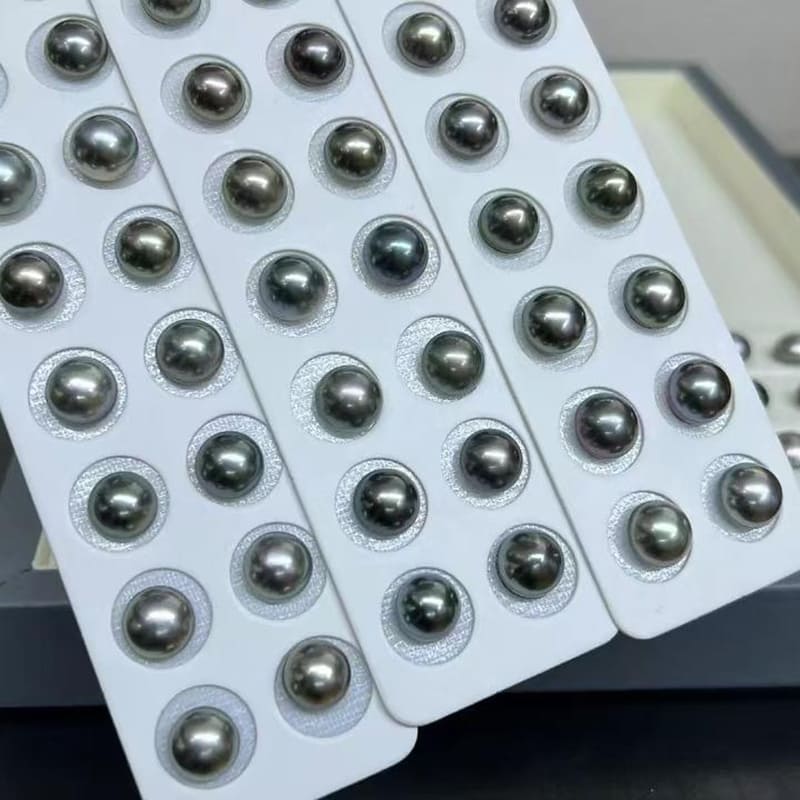
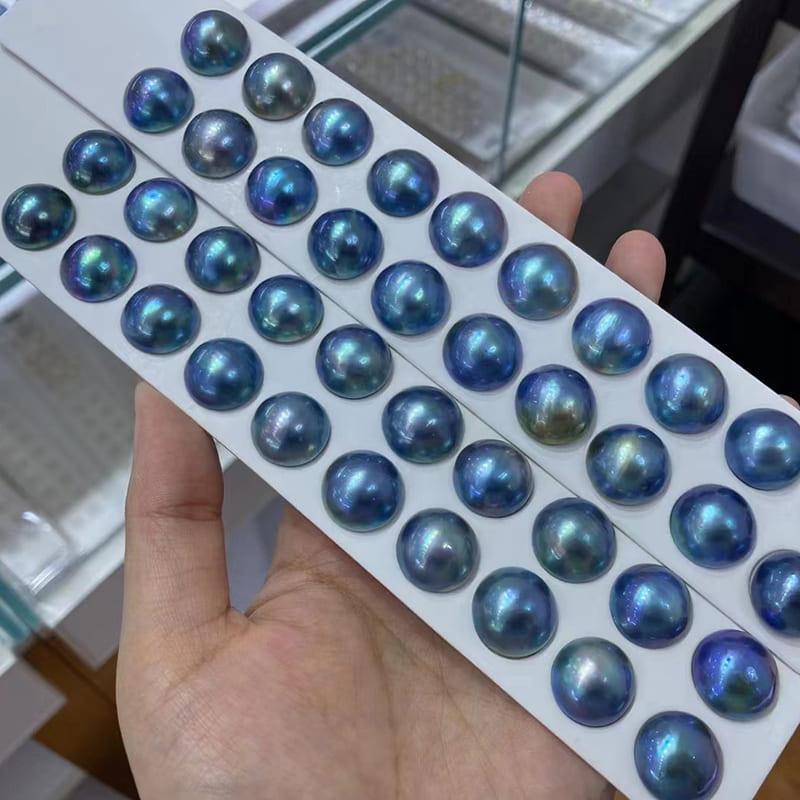
From Japan, the technology and practice of Mabe pearl cultivation spread to other pearl-producing regions. Australia, Indonesia, the Philippines, and French Polynesia all became significant producers, each using local oyster species and often imparting subtle regional characteristics to their pearls. For instance, Mabe pearls from the black-lipped oyster (Pinctada margaritifera) of Tahiti can exhibit stunning dark body colors with green, blue, or peacock overtones, while those from the silver-lipped or gold-lipped oyster (Pinctada maxima) of Australia and Indonesia can display the coveted white, silver, or golden hues associated with South Sea pearls.
Historically, Mabe pearls were celebrated for their ability to offer the grandeur of a large pearl at a fraction of the cost of a solid, round South Sea or Tahitian pearl of comparable diameter. This made them immensely popular in mid-century jewelry, particularly in bold cocktail rings and dramatic pendant necklaces. Their large, smooth surface was a perfect canvas for the design aesthetics of the time.
Today, the history of Mabe pearl cultivation continues to evolve. Modern techniques have refined the process, leading to higher quality nacre, better matching, and more consistent shapes. While they may not always be in the high-fashion limelight, their enduring appeal among independent jewelry designers and consumers who appreciate their unique blend of size, beauty, and value ensures their place in the contemporary pearl market. Understanding this rich history helps us appreciate the Mabe pearl not just as a commodity, but as a product of a fascinating cultural and technological legacy.
From Shell to Shine – How Are Mabe Pearls Formed and Harvested?
The creation of a Mabe pearl is a delicate dance between human skill and natural biology. The process, known as Mabe pearl cultivation, is a multi-year endeavor that requires patience, expertise, and a deep respect for the marine environment. Let’s break down the step-by-step journey of how these unique gems come to be.
Step 1: Selecting the Perfect Host The process begins with the selection of healthy, mature oysters. The most common species used for Mabe pearl production are:
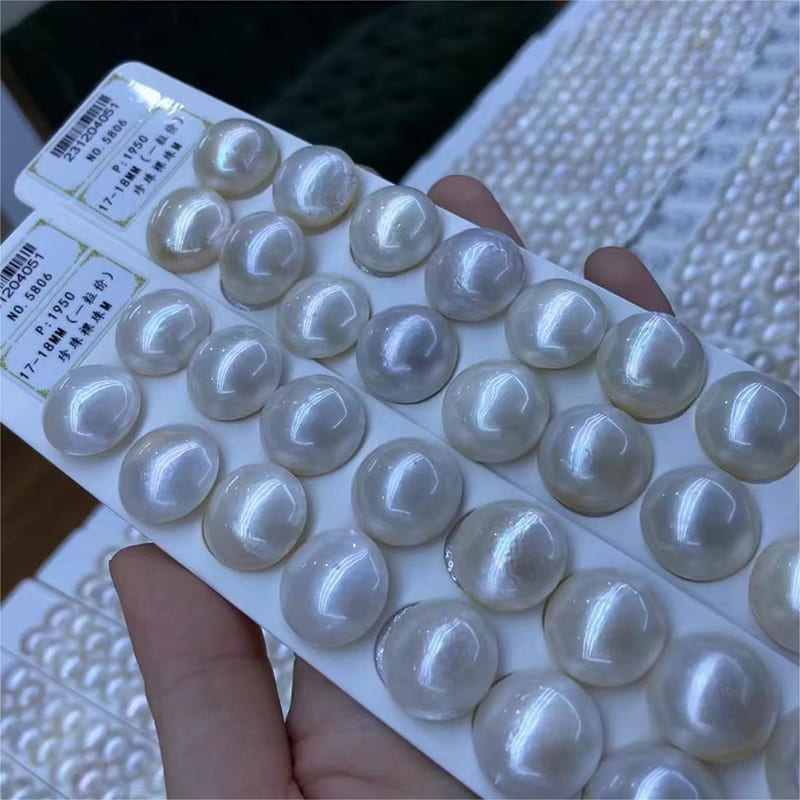
- Pteria penguin (Mabe Oyster): The classic choice, known for producing white or cream-colored Mabe pearls with excellent luster.
- Pinctada maxima (Silver/Gold-Lipped Oyster): Used to create larger Mabe pearls in white, silver, or golden hues.
- Pinctada margaritifera (Black-Lipped Oyster): The source of exotic, dark-colored Mabe pearls with vibrant overtones.
These oysters are carefully farmed in pristine, protected bays and atolls where water conditions are optimal for their health and nacre production.
Step 2: The Surgical Implantation (Nucleation) This is the critical moment of human intervention. A skilled technician performs a precise surgical procedure on the oyster. Instead of inserting a round bead into the gonad (as with round pearls), the technician glues a hemispherical nucleus—typically a plastic or, more commonly, a mother-of-pearl half-bead—to the inside wall of the oyster’s shell. This nucleus acts as the irritant that triggers the oyster’s defense mechanism.
Step 3: The Long Wait: Nacre Deposition The oyster is then returned to the water and left to rest for a period of 18 to 24 months, sometimes even longer. During this time, the mollusk’s mantle tissue slowly and meticulously deposits layer upon layer of nacre (calcium carbonate in the form of aragonite platelets bound by conchiolin) over the implanted nucleus. This is the same iridescent substance that lines the inside of the shell and gives all pearls their characteristic luster and orient. The quality of the nacre—its thickness, smoothness, and crystalline structure—is what ultimately determines the pearl’s beauty and value.
Step 4: Harvesting the Blister After the designated growth period, the oysters are retrieved from the water. The technician carefully opens the shell and cuts out the now fully-formed blister pearl, which is still firmly attached to a piece of the oyster’s shell.
Step 5: The Art of Finishing: From Blister to Gem This is where the raw blister is transformed into a finished Mabe pearl gem. The process involves several meticulous steps:
- Cleaning: The blister is thoroughly cleaned to remove any organic residue.
- Cutting: The blister is precisely cut away from the shell fragment.
- Hollowing: The back of the blister is carefully drilled and the inner contents—the original nucleus and any loose organic material—are removed, leaving a hollow, domed shell of pure nacre.
- Filling: The hollow cavity is filled with a clear, durable epoxy resin. Often, a small, thin disc of mother-of-pearl is placed inside before the resin is added. This serves two purposes: it provides structural integrity and enhances the optical properties of the pearl by reflecting light back through the nacre, boosting its luster.
- Backing and Polishing: The flat back is then capped, usually with a piece of mother-of-pearl or a thin metal plate, and polished to a perfectly smooth, flat finish. This final step creates the stable base that jewelers love.
This detailed finishing process is what allows a Mabe pearl to be a lightweight yet durable gemstone, perfect for a wide array of jewelry applications. It’s a craft that blends science and artistry, turning a simple biological response into a wearable work of art.
The Hallmarks of Beauty – Understanding Mabe Pearl Quality Factors
Not all Mabe pearls are created equal. Like all fine gemstones, their value and desirability are determined by a set of key quality factors. When you are in the market to buy Mabe pearls, whether for personal collection or for your jewelry business, knowing how to evaluate these factors is paramount. The main criteria are Luster, Surface Quality, Shape, Color, and Nacre Thickness.
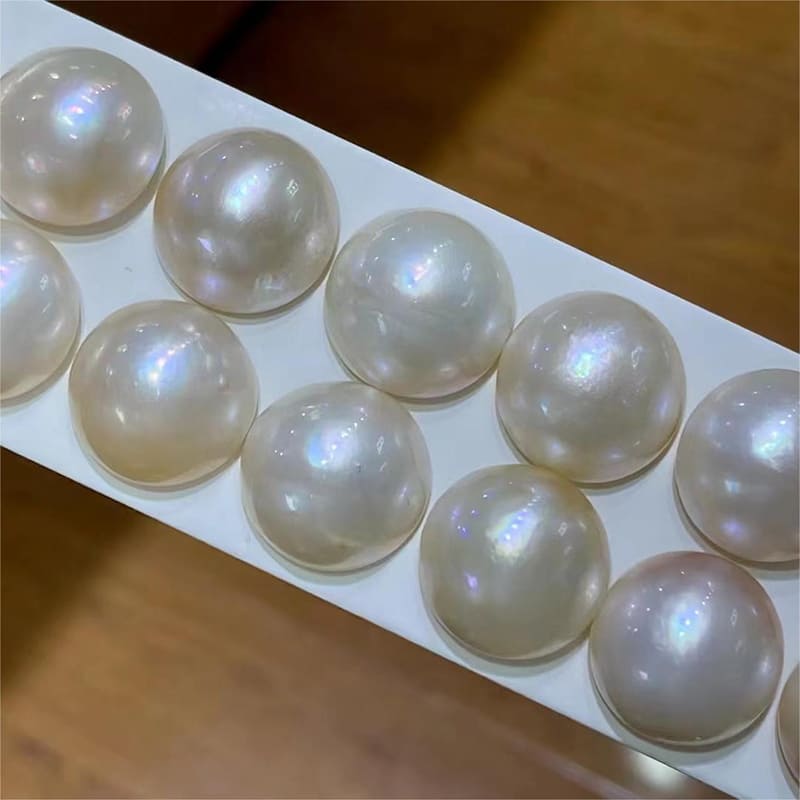
1. Luster: The Soul of the Pearl Luster is arguably the most important quality factor for any pearl, and Mabe pearls are no exception. It refers to the sharpness and intensity of the light reflections on the pearl’s surface. High-quality Mabe pearls exhibit a bright, mirror-like luster where you can clearly see your reflection. This is a direct result of a thick, well-formed nacre layer with tightly packed, aligned aragonite crystals. A dull or chalky appearance indicates poor nacre quality and significantly lowers the pearl’s value. When asking how to judge Mabe pearl quality, always start with the luster.
2. Surface Quality: The Quest for Perfection The surface of a Mabe pearl should be as clean and blemish-free as possible. Common surface characteristics include tiny pinpricks, wrinkles, spots, or minor abrasions. A completely flawless surface is rare and commands a premium price. However, because Mabe pearls are typically used with their domed top facing outward in jewelry, minor blemishes on the sides or near the girdle (the edge where the dome meets the flat back) are often acceptable and can represent a good value. The key is that the central, most visible part of the dome should be clean.
3. Shape: The Ideal Hemisphere The most desirable shape for a Mabe pearl is a perfect, symmetrical hemisphere—a smooth, even dome. Other shapes, such as button-like or irregular domes, are less valuable. The symmetry is crucial for a balanced and elegant look in the final piece of jewelry.
4. Color: A World of Possibilities Mabe pearls come in a stunning array of natural colors, dictated by the host oyster species and the environment in which it was grown. The most common are:
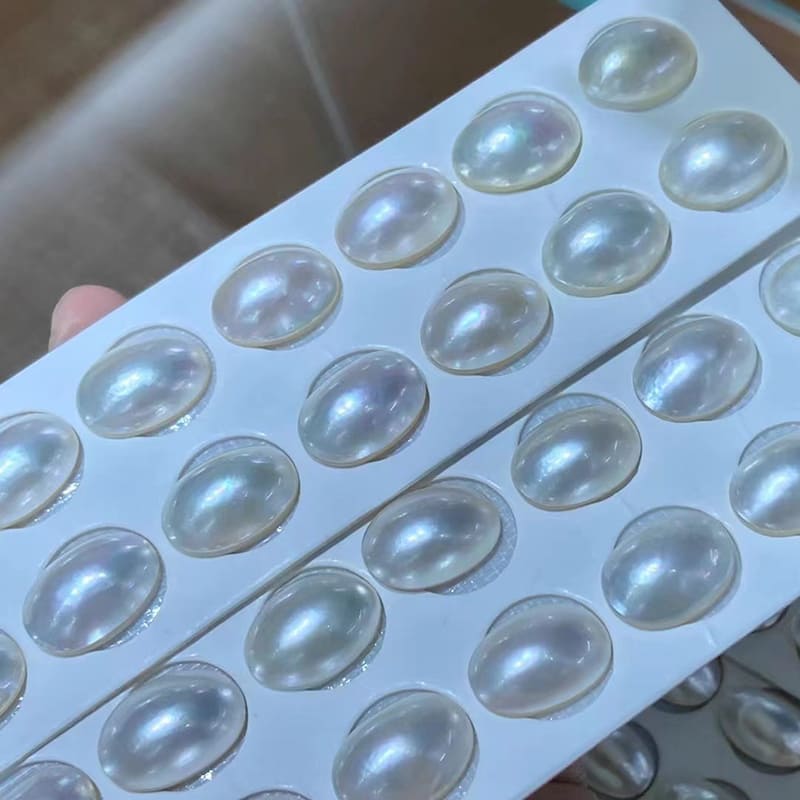
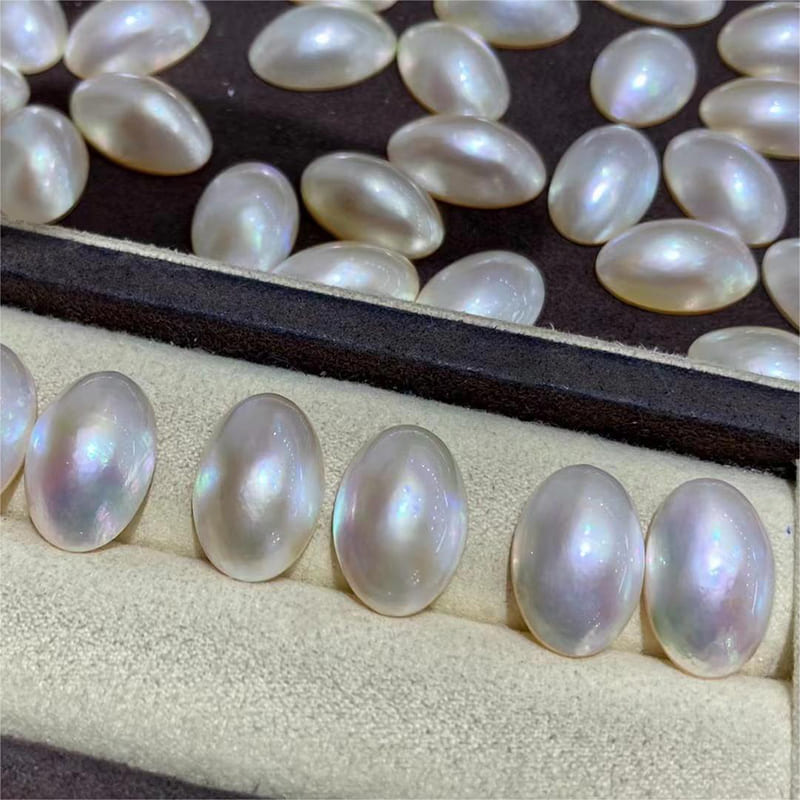
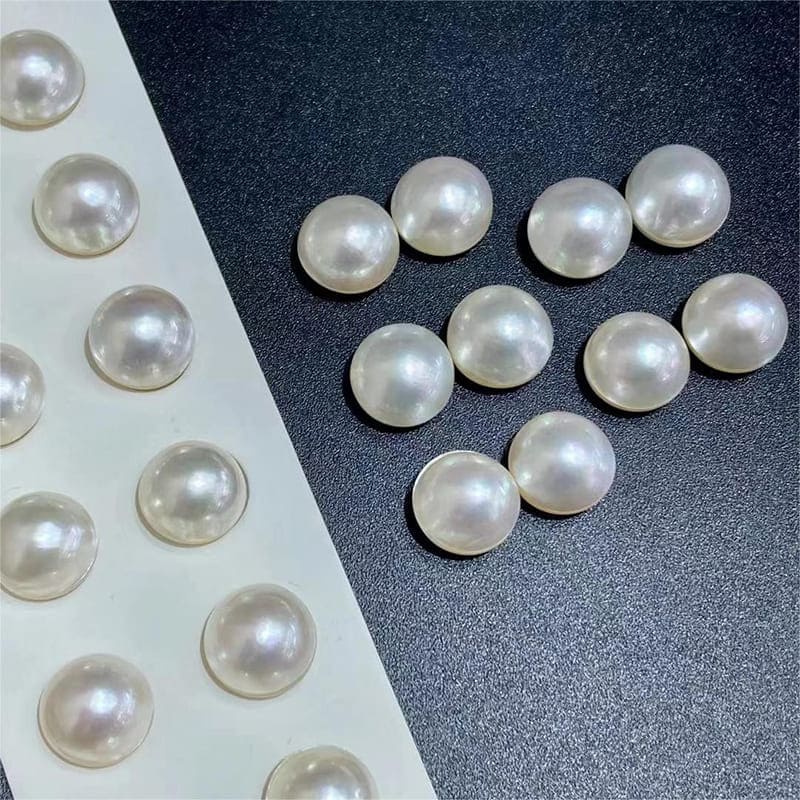
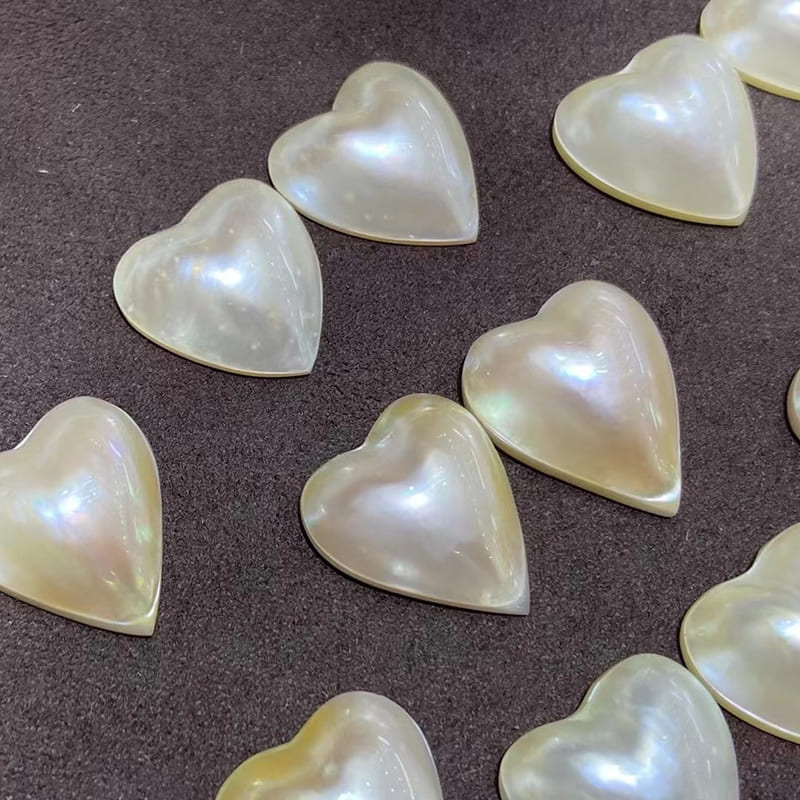
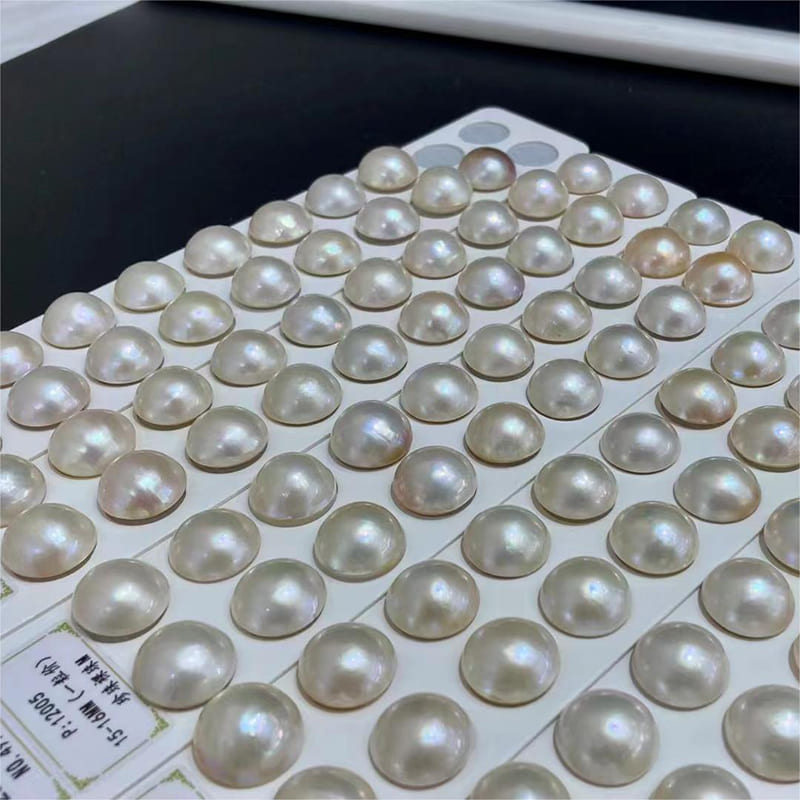
- White/Cream: From the Pteria penguin oyster.
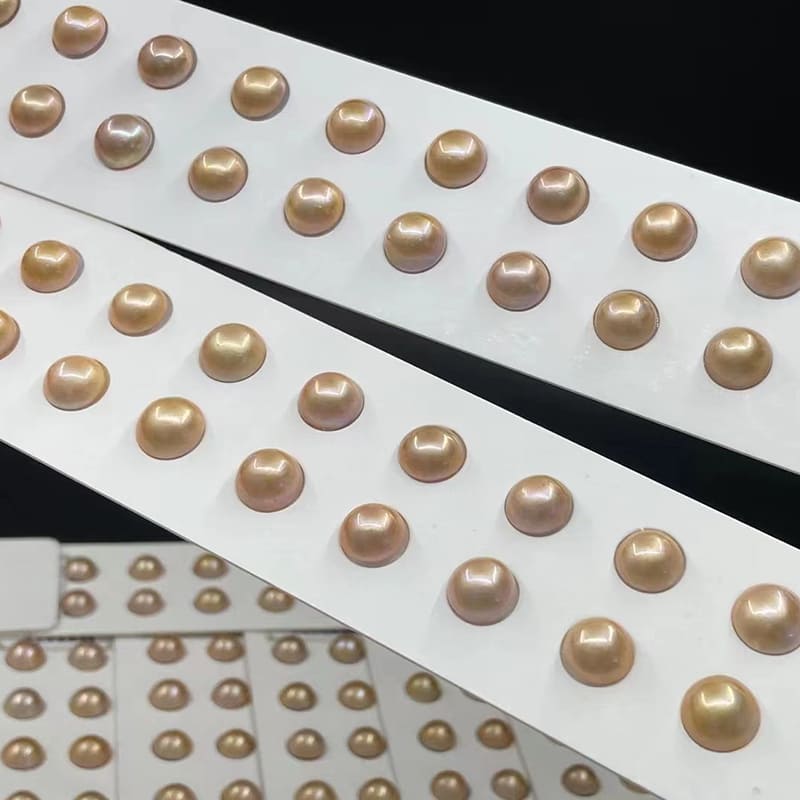
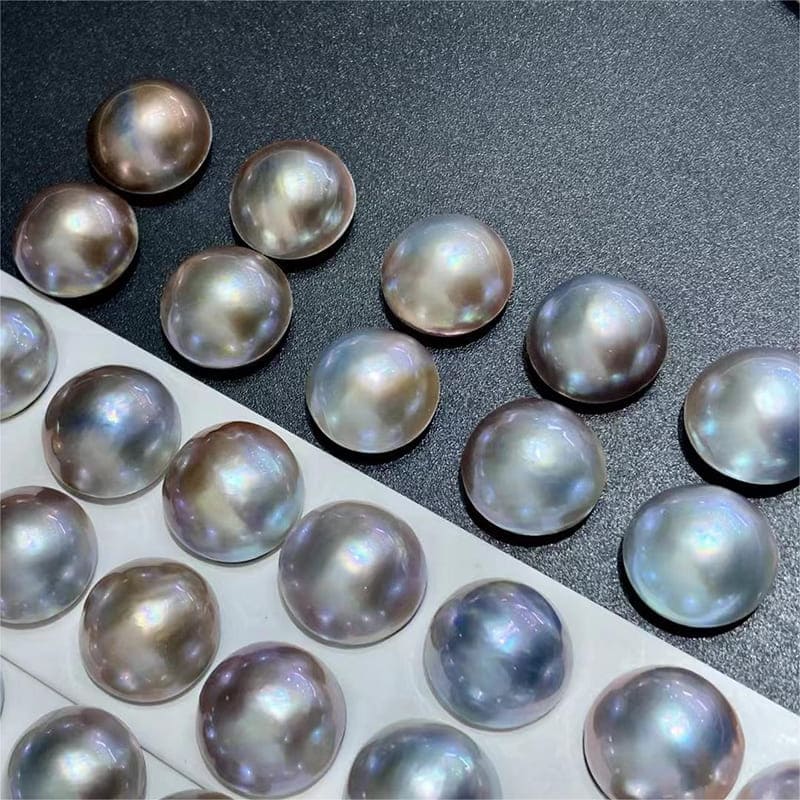
- Silver/White & Gold: From the Pinctada maxima oyster.
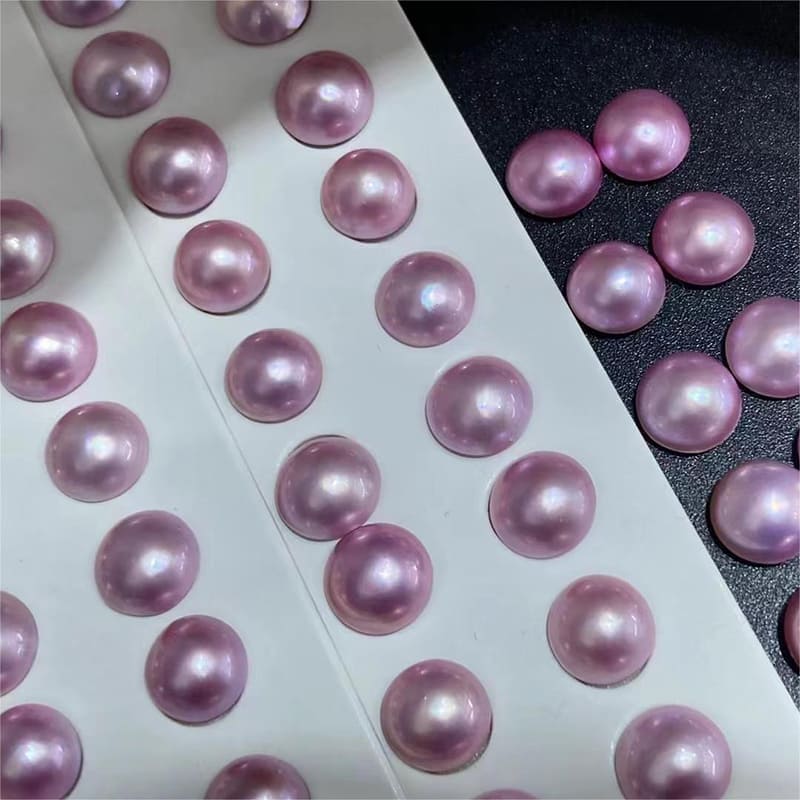
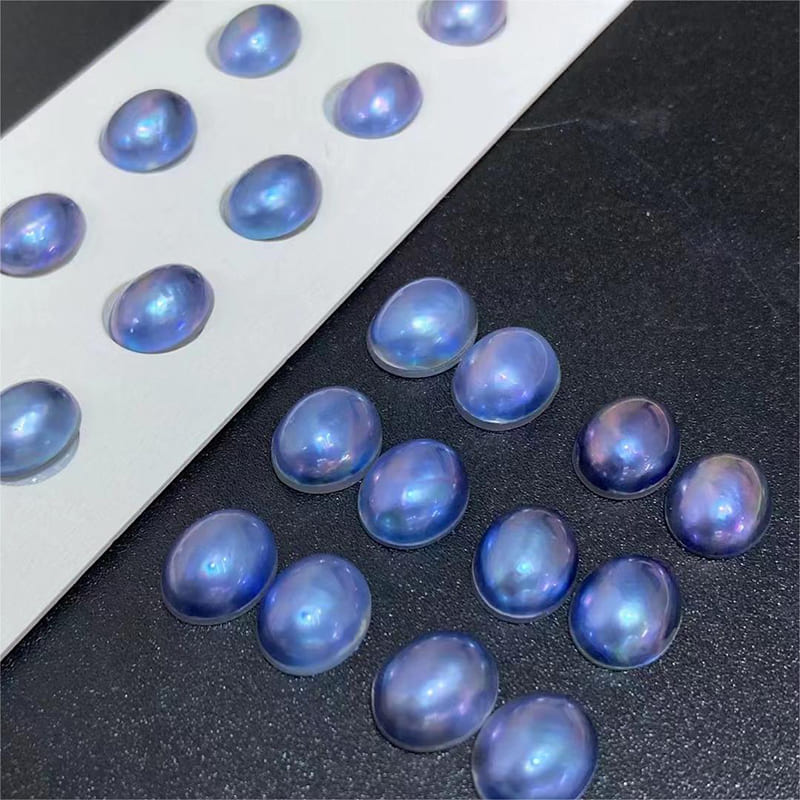
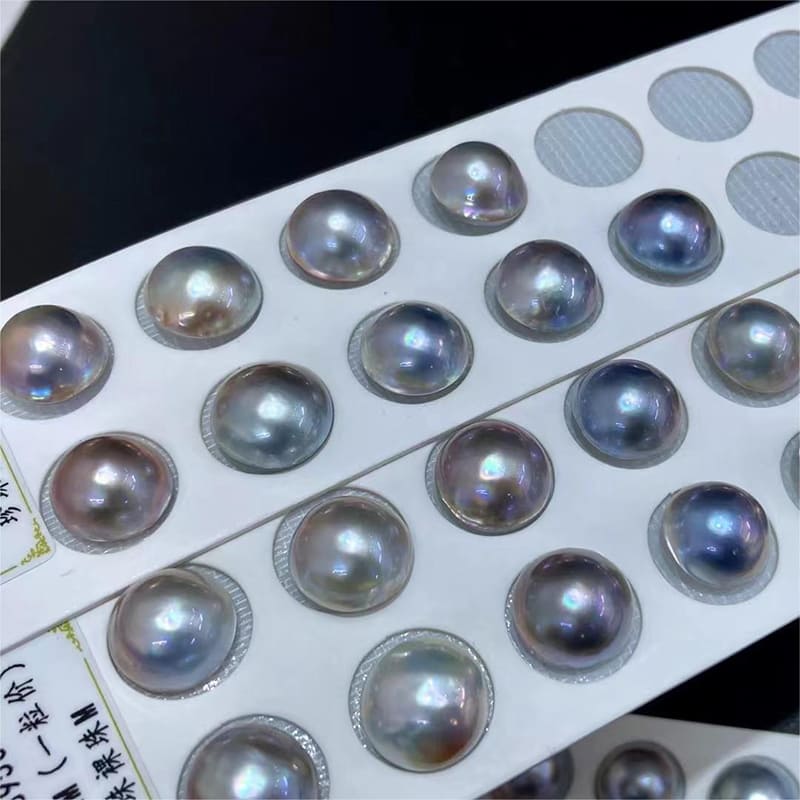
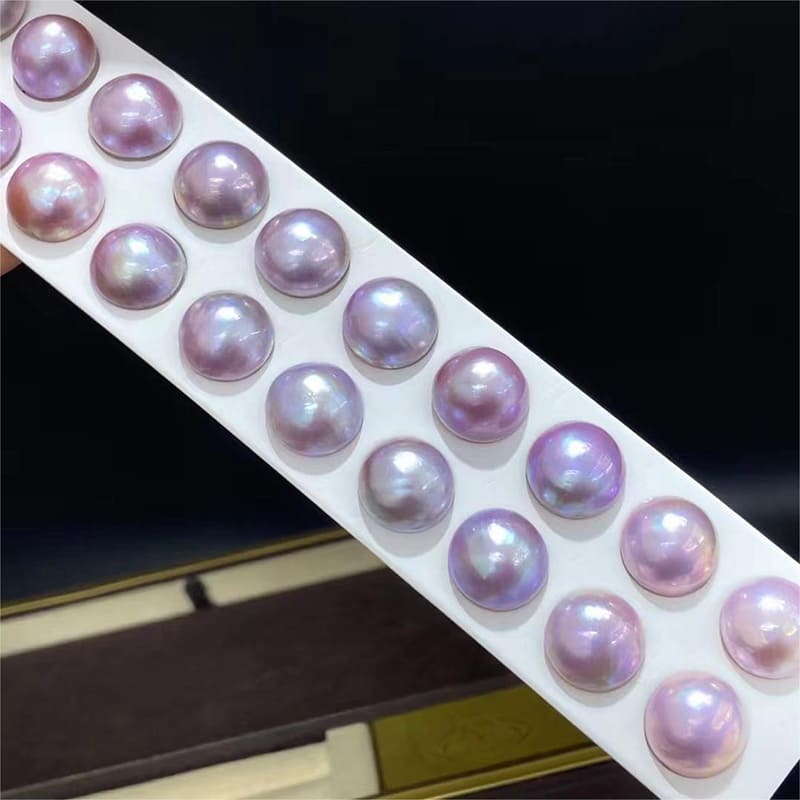
- Peacock Green, Aubergine, Blue, Grey: From the Pinctada margaritifera (Tahitian) oyster. The body color is often accompanied by beautiful overtones—subtle secondary colors that appear to float over the main body color. A strong, attractive overtone can greatly enhance a pearl’s beauty. Uniformity of color is important when buying a pair or a set for jewelry.
5. Nacre Thickness: The Foundation of Durability and Beauty This is a critical, albeit hidden, factor. The nacre layer must be thick enough to be durable and to produce that deep, glowing luster. A thin nacre layer can chip, peel, or appear dull and lifeless. Reputable suppliers ensure their Mabe pearls have a substantial nacre coating, which is a key indicator of a well-grown, high-quality pearl.
By understanding and prioritizing these five factors, you can confidently navigate the market and select Mabe pearls that offer the perfect balance of beauty and value for your needs.
Mabe vs. The World – Comparing Mabe Pearls to Other Pearl Types
To truly appreciate the unique niche that Mabe pearls occupy, it’s helpful to compare them directly to other major pearl categories. This comparison will clarify their strengths and help you decide if they are the right choice for your project or purchase.
| Feature | Mabe Pearl | Akoya Pearl | Freshwater Pearl | South Sea Pearl | Tahitian Pearl |
|---|---|---|---|---|---|
| Origin | Saltwater (Oyster shell) | Saltwater (Oyster tissue) | Freshwater (Mussel tissue) | Saltwater (Oyster tissue) | Saltwater (Oyster tissue) |
| Shape | Hemispherical (Domed) | Round, Near-Round | Various (Round, Oval, Baroque) | Round, Near-Round, Oval | Round, Near-Round, Baroque |
| Size Range | Large (8mm – 20mm+) | Small-Medium (2mm – 10mm) | Small-Large (2mm – 15mm+) | Very Large (9mm – 18mm+) | Medium-Large (8mm – 16mm+) |
| Nucleus | Hemispherical (on shell) | Round Bead | Tissue-only (mostly) | Round Bead | Round Bead |
| Structure | Hollow (filled with resin) | Solid Nacre over bead | Solid Nacre | Solid Nacre over bead | Solid Nacre over bead |
| Luster | Very High | Exceptionally High | Good to Very High | Soft, Satin-like | High to Very High |
| Price Point | Affordable (for its size) | Moderate | Most Affordable | Most Expensive | Expensive |
| Best For | Statement jewelry, large designs | Classic strands, stud earrings | Versatile, trendy designs | Luxury, investment pieces | Exotic, bold fashion statements |
Key Takeaways from the Comparison:
- Size Advantage: Mabe pearls offer the largest face-up size for the lowest price. You can get a 15mm Mabe pearl for a fraction of the cost of a 15mm solid South Sea pearl.
- Structural Difference: The hollow, filled structure makes Mabe pearls lightweight, which is comfortable for large earrings or pendants. However, it also means they require slightly more care than solid pearls and are not suitable for drilling through the center.
- Design Flexibility: The flat back is a huge advantage for jewelers. It allows for secure, simple, and elegant settings that showcase the entire pearl surface without prongs covering it up.
- Value Proposition: If your goal is to create a piece of jewelry with a large, impressive pearl presence without a luxury price tag, Mabe pearls are an unbeatable choice.
Understanding these distinctions empowers you to make an informed decision based on your aesthetic preferences, budget, and functional requirements.
Caring for Your Treasure – The Essential Guide to Mabe Pearl Jewelry Care
Your Mabe pearl jewelry is a precious investment that can last for generations with proper care. Because they are organic gems, pearls— including Mabe pearls—are more delicate than hard gemstones like diamonds or sapphires. Their nacre surface can be scratched, and the resin filling can be damaged by harsh chemicals. Here is your complete guide to Mabe pearl care and maintenance.
Do’s:
- Put Them On Last, Take Them Off First: Always apply your Mabe pearl jewelry after you have finished applying cosmetics, hairspray, and perfume. These products contain chemicals and alcohols that can dull the nacre and degrade the resin filling over time.
- Wipe After Wearing: After each wear, gently wipe your Mabe pearls with a soft, clean, damp cloth (like a microfiber eyeglass cloth) to remove any traces of sweat, oil, or dirt. Allow them to air dry completely before storing.
- Store Properly: Store your Mabe pearl jewelry separately from other pieces to prevent scratches. The best option is to keep them in a soft pouch or a lined jewelry box compartment. Avoid airtight plastic bags, as pearls need to breathe to maintain their moisture content.
- Professional Cleaning: For a deeper clean, take your Mabe pearl jewelry to a professional jeweler who specializes in pearls once a year. They have the expertise and gentle cleaning solutions to restore their luster without causing damage.
Don’ts:
- Never Use Harsh Cleaners: Do not use ultrasonic cleaners, steam cleaners, or any abrasive household cleaners (like baking soda or toothpaste) on your Mabe pearls. These can permanently etch the nacre surface and melt the resin filling.
- Avoid Prolonged Sunlight and Heat: Extreme heat and direct, prolonged sunlight can cause the nacre to dry out, crack, and fade in color. It can also soften the resin filling.
- Don’t Wear in Water: Remove your Mabe pearl jewelry before swimming (in pools, oceans, or hot tubs) or showering. Chlorine, salt, and soap are all harmful to pearls.
- Don’t Store in Dry Environments: A very dry environment can cause the nacre to become brittle. If you live in a dry climate, consider storing your pearls with a small, damp (not wet) piece of cotton to maintain some humidity.
By following these simple guidelines, you can ensure that your Mabe pearl jewelry retains its beautiful luster and structural integrity for many years to come.
Unleashing Creativity – Popular Uses and Designs for Mabe Pearls in Jewelry
The unique physical properties of the Mabe pearl—the large, smooth dome and the flat back—make it a favorite among jewelry designers for creating bold, beautiful, and innovative pieces. Its versatility is one of its greatest assets.
Classic and Timeless Designs:
- Mabe Pearl Rings: Perhaps the most iconic use. A large Mabe pearl set as the centerpiece of a ring creates an immediate statement. The flat back allows it to sit comfortably and securely on the finger, while the domed top catches the light beautifully. They are often set in simple bezels or with minimal prongs to let the pearl shine.
- Mabe Pearl Pendants: A single Mabe pearl on a chain is an elegant and sophisticated choice. The large surface area makes it a perfect focal point for a necklace, drawing the eye to the décolletage.
- Mabe Pearl Earrings: From classic studs to dramatic drop earrings, Mabe pearls add a touch of glamour. Their lightweight nature makes even large styles comfortable for extended wear.
Modern and Artistic Interpretations:
- Mixed Media Jewelry: Contemporary designers love to combine Mabe pearls with other materials like gold, silver, diamonds, colored gemstones, or even wood and leather. The pearl’s organic form contrasts beautifully with geometric metalwork or the sparkle of diamonds.
- Boho and Statement Pieces: The large size and unique shape lend themselves perfectly to bohemian or avant-garde styles. Multiple Mabe pearls can be clustered together, or a single large pearl can be the centerpiece of an elaborate, handcrafted piece.
- Bridal Jewelry: Mabe pearls are a popular choice for brides seeking something unique and romantic. A Mabe pearl pendant or a pair of elegant Mabe pearl earrings can complement a wedding gown beautifully without the hefty price tag of a full strand of South Sea pearls.
For jewelry makers and designers sourcing wholesale Mabe pearls, the possibilities are endless. The availability of various sizes, colors, and qualities allows for incredible creative freedom. Whether you are crafting a minimalist modern piece or a vintage-inspired masterpiece, the Mabe pearl provides a stunning, cost-effective canvas.
Demystifying the Market – Mabe Pearl Value, Pricing, and Where to Buy
Understanding the Mabe pearl price guide and what influences their value is crucial for both buyers and sellers. Unlike diamonds, which have a standardized grading system (the 4Cs), the pearl market relies on a combination of the quality factors we discussed earlier (luster, surface, shape, color, nacre) along with market demand and origin.
Factors Influencing Price:
- Quality Grade: High-luster, clean, symmetrical, and thick-nacre Mabe pearls command the highest prices.
- Size: Larger Mabe pearls are generally more valuable, though this is always in relation to their quality. A large, low-quality pearl is worth less than a smaller, high-quality one.
- Color: While white and cream are classic and widely available, exotic colors from Tahitian or South Sea oysters (like peacock green or deep gold) can be more valuable due to their rarity and unique appeal.
- Origin: Pearls from renowned farming regions with strict quality controls may carry a slight premium.
Where to Buy Mabe Pearls: Consumers and businesses have several options, each with its pros and cons:
- Local Jewelry Stores: Offer the ability to see and touch the pearls, but selection is often limited, and prices include a significant retail markup.
- Online Retail Jewelers: Provide a wider selection and competitive pricing, but you are buying sight-unseen, and you’re still paying a retail price.
- Pearl Auctions: Can offer deals, but require expertise to avoid low-quality lots and involve a bidding process.
- Direct from a Wholesaler: This is the most cost-effective route, especially for jewelry designers, small businesses, or anyone looking to buy in bulk. You cut out the middleman and deal directly with the source, securing the best possible price for the quality you need.
When buying online, it’s essential to choose a reputable supplier with a proven track record, clear return policies, and high-quality photography that accurately represents the product.
Your Trusted Source – Buying High-Quality Wholesale Mabe Pearls from Pearls from China
If you’ve been searching for a reliable, direct source for wholesale Mabe pearls, your search ends here. Pearls from China is a premier online destination that connects you directly with the heart of the world’s pearl industry.
We specialize in providing an extensive and meticulously curated collection of high-quality Mabe pearls in every imaginable size, shape, color, and grade. Our inventory includes classic white Mabe pearls from the Pteria penguin oyster, luxurious golden and silver Mabe pearls from the Pinctada maxima, and exotic, dark-hued Mabe pearls from the Tahitian black-lipped oyster.
Why Choose Pearls from China for Your Wholesale Mabe Pearl Needs?
- Unbeatable Wholesale Prices: By sourcing directly from farms and cutting out all unnecessary intermediaries, we offer the most competitive wholesale Mabe pearl prices on the market. You get exceptional value without compromising on quality.
- No Minimum Order Quantity (MOQ): We believe that everyone, from the independent jewelry designer working on a single custom piece to the large retailer stocking their shelves, deserves access to premium pearls. That’s why we have no minimum order quantity. You can buy a single, perfect Mabe pearl or a thousand—we welcome orders of any size.
- Global Shipping: No matter where you are in the world, we can deliver your Mabe pearls to your doorstep. We offer fast, reliable, and fully insured international shipping to ensure your precious cargo arrives safely and promptly.
- Rigorous Quality Control: Every single Mabe pearl in our collection is hand-inspected by our experts to ensure it meets our high standards for luster, surface, and nacre quality. We are committed to transparency and honesty in our product descriptions and imagery.
- Expert Support: Our team of pearl specialists is always on hand to answer your questions, help you select the perfect pearls for your project, and provide guidance on everything from grading to care.
Whether you are looking for Mabe pearls for sale for jewelry making, seeking to build your personal collection, or sourcing inventory for your boutique, Pearls from China is your trusted partner. We are dedicated to making the world of beautiful, authentic Mabe pearls accessible and affordable to everyone.
Visit Pearls from China today and discover the perfect Mabe pearls for your next creation. Experience the quality, value, and service that has made us a favorite among pearl enthusiasts and professionals worldwide.
New Products Arrival